eBooks
92 Books foundAbout the UFOMY Public Domain Literature Library
UFOMY offers a carefully selected collection of 92 public-domain works in English, bringing together philosophical treatises, ethical reflections, historical debates, and playful introductions to logic. The catalogue is designed for readers of historical texts who seek to explore ideas across centuries and cultures.
Browsing the Catalogue
Works are organized into two broad categories: Ethics, Logic & Ideas and Exploring Young Readers & Adventures. You can browse by category or explore the full list. Every book record includes title, author, publisher, keywords, and a catalogue note that explains the work's content and context. Use the search function to find titles by keyword or author.
Understanding Book Records
Each entry lists the work's title, original author, translator or editor where applicable, and the digital source (Project Gutenberg). Keywords help identify themes, and the target-reader field indicates the intended audience. The catalogue note offers editorial commentary on structure, style, and intellectual background—drawn from the catalogue project's reading, not from automated analysis.
Source Attribution
All texts are sourced from Project Gutenberg, ensuring reliable transcriptions of public-domain editions. UFOMY does not host the full texts but provides reading guides and contextual notes to enhance your engagement with the originals.
Three Reading Paths
Path 1: Classical Foundations
Begin with Plato's Phaedrus for a dialogue on love and rhetoric, then move to Epictetus's Encheiridion for Stoic ethics, and Cicero's philosophical works for Roman synthesis.
Path 2: Modern Critics
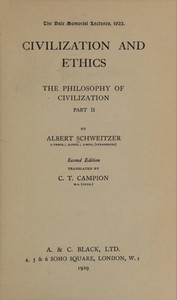
Follow the thread of skepticism with David Hume's essays, then Nietzsche's Dawn of Day, and conclude with Albert Schweitzer's Civilization and Ethics.
Path 3: Practical Wisdom
Try Arnold Bennett's How to Live on 24 Hours a Day for time management, Frank Anderson's lecture on business ethics, and John Ruskin's Ethics of the Dust for moral philosophy through crystallography.
Bibliographic dates and catalogue measurements
The catalogue distinguishes the Project Gutenberg digital release from a work’s original or first publication. Project Gutenberg is identified as the digital source for the edition available here; its release year is therefore shown as Gutenberg Release Year, not as the work’s original publication year.
When an explicit first-publication or issue date can be supported directly by the title or issue information, it may be shown separately as First Publication Year. When that date cannot be confirmed, the catalogue displays Not confirmed rather than guessing a year.
Where the source text can be measured reliably, the catalogue may provide word count and estimated reading time. These measurements describe reading scope and are not quality rankings.
The current catalogue contains 4 active subject categories: Ethics, Logic, Metaphysics, and Political Philosophy. Categories are browsing aids and may overlap where a work reasonably fits more than one subject.
- Featured