About 47 minutes
Have you an educated heart? — Reading Notes
Ethics
10,593 recorded words. 2 minutes difference from this book's estimate.
View Gutenberg source #69614
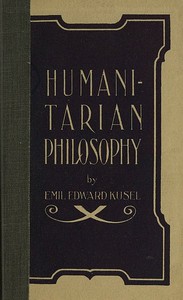
The catalog record for Humanitarian Philosophy, 4th Edition — Reading Companion provides practical reading context through 11,254 words, 49 min estimated reading time, and 3 detected text sections.
The text analysis averages about 23.0 words per sentence, while the detected sections provide another way to judge how the source is divided.
Project Gutenberg metadata also associates the work with “Animal welfare,” connecting these edition facts with the source record’s subject description.
Explore this collection
These alternatives are selected using recorded categories and estimated reading time.
About 47 minutes
Ethics
10,593 recorded words. 2 minutes difference from this book's estimate.
View Gutenberg source #69614About 56 minutes
Ethics
12,691 recorded words. 7 minutes difference from this book's estimate.
View Gutenberg source #76629About 40 minutes
Ethics
8,991 recorded words. 9 minutes difference from this book's estimate.
View Gutenberg source #29276Search stored excerpts and compare books → Choose by your preferences →
Choices use stored catalog measurements. Estimates vary with reading speed. A shared category is a catalog label, not a claim that two books have the same argument or literary quality.
Search reads excerpt text stored with this catalog and links to its associated Gutenberg record. The connection is stored in the site database; this tool does not recheck that every excerpt is word-for-word identical to that external record. Excerpt search does not cover every chapter and does not verify historical publication dates.
Catalog snapshot checked: 2026-09-25. Coverage: 92 public books, 92 available source excerpts.
Calculated from edition completeness, EPUB availability, text structure and catalogue metadata. Not a user rating.
Total of 100 points, scaled to a 2.5-5.0 range. Editions with an empty description or a missing EPUB file are not scored.
Public-domain source text
The source text is kept in the dedicated reader, separate from this catalogue record and its commentary.
Emil Edward Kusel opens his 1912 Humanitarian Philosophy with a note disclaiming any intent to mock individuals, yet immediately declares that “the flesh-eating religionist is an accessory to a crime more bestial in the sight of God than any other sin.” The book’s structure—epigrams, testimonial “Kind Words,” and a catechistic Q&A—reflects a combative, conversion-minded purpose. Kusel frames his argument as a corrective to institutional Christianity, which he charges with ignoring the Bible’s own humane passages. The opening pages establish a tone of moral certainty: the author “knows it absolutely” that carnivorous churchgoers are not of God.
The book begins with a cluster of epigrams from Bible verses and Mary Baker Eddy, then moves into a section titled “Kind Words”—short endorsements from readers. These testimonials describe the work as “an eye opener” and note that it “made me angry, but praise God.” Kusel uses this chorus to preempt criticism and frame his message as a difficult truth. The epigrammatic style recurs throughout, especially in “IN AND BETWEEN THE LINES,” where Kusel strings together Bible verses such as “Be not among eaters of flesh” and “Your stomachs are an open sepulchre.” This technique compresses his argument into memorable, quotable units that resist extended rebuttal.
The central section is a series of pointed questions and answers. Kusel fields objections about animal predation, the Golden Rule, and biblical passages that seem to permit meat-eating. His replies are blunt: “I do not object to anyone eating flesh food—eat whatever you like, but I do point out the wrong of taking life.” He dismisses the argument that animals prey on each other by reminding the questioner of their professed higher morality. The Q&A format allows Kusel to control the terms of debate, reducing complex theological issues to stark binaries. Notably, he refuses to engage with the practical question “What shall we do with all the animals?” by turning it back: “Is that why you eat flesh?”
Kusel devotes considerable space to quoting and reinterpreting Bible verses. He lists passages often used to justify meat-eating—Mark 7:15, Romans 14:2, 1 Timothy 4:1–4, and Peter’s vision in Acts 10—and implicitly argues that they are misapplied by a “petrified conscience.” His own selections emphasize mercy, the spirit of animals, and the sin of killing. The book’s epigraphs from Buddha and Mary Baker Eddy signal a broader spiritual authority beyond sola scriptura. Kusel’s method is not scholarly exegesis but rhetorical counter-quotation: he pits verse against verse to expose what he sees as hypocrisy.
Kusel writes in a direct, often confrontational first person. He describes his own certainty: “I don’t think it, I know it absolutely.” The book’s fourth edition suggests a sustained campaign; the inclusion of “Kind Words” and “Complimentary” sections implies a community of converts. Yet the author remains the sole voice of authority—no other thinker is cited at length. The prose is repetitive and emphatic, relying on italics and exclamation. This personal, almost sermonic tone gives the work the feel of a manifesto rather than a philosophical treatise. Readers should expect a passionate, uncompromising argument that prioritizes moral clarity over nuance.
Kusel’s Humanitarian Philosophy is best approached as a period document of early twentieth-century religious vegetarian activism. Its structure—testimonials, epigrams, Q&A—mirrors the pamphleteering tradition. Readers interested in the intersection of Christian ethics and animal welfare will find a fervent, if repetitive, case. The book rewards attention to its rhetorical strategies: how Kusel selects and arranges scripture, how he frames dissent, and how he constructs an uncompromising moral identity. It is a work less of philosophy than of persuasion.
Kusel's certainty about diet as prayer made me think of Grandmother’s wooden chair, the one she’d pull close to the stove while reading aloud. The same quiet resolve surfaces in Revolted Woman: Past, present, and to come — Background and Themes, where moral hunger finds its own grammar. Both books spoke to me like a letter left unanswered, but somehow still warm.
Create a short personal record of your experience with this book.