About 151 minutes
H. P. Blavatsky; A Great Betrayal — A Reader’s Guide
Ethics
34,536 recorded words. 3 minutes difference from this book's estimate.
View Gutenberg source #36373
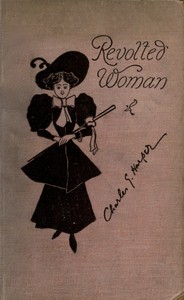
For Revolted Woman: Past, present, and to come — Background and Themes, the stored edition analysis reports 35,229 words, 2 hr 34 min estimated reading time, and 5 detected text sections.
The text analysis averages about 26.0 words per sentence, while the detected sections provide another way to judge how the source is divided.
Project Gutenberg metadata also associates the work with “Women -- Social and moral questions,” connecting these edition facts with the source record’s subject description.
Explore this collection
These alternatives are selected using recorded categories and estimated reading time.
About 151 minutes
Ethics
34,536 recorded words. 3 minutes difference from this book's estimate.
View Gutenberg source #36373About 157 minutes
Ethics
36,110 recorded words. 3 minutes difference from this book's estimate.
View Gutenberg source #58058About 163 minutes
Ethics
37,420 recorded words. 9 minutes difference from this book's estimate.
View Gutenberg source #14209Search stored excerpts and compare books → Choose by your preferences →
Choices use stored catalog measurements. Estimates vary with reading speed. A shared category is a catalog label, not a claim that two books have the same argument or literary quality.
Search reads excerpt text stored with this catalog and links to its associated Gutenberg record. The connection is stored in the site database; this tool does not recheck that every excerpt is word-for-word identical to that external record. Excerpt search does not cover every chapter and does not verify historical publication dates.
Catalog snapshot checked: 2026-09-25. Coverage: 92 public books, 92 available source excerpts.
Calculated from edition completeness, EPUB availability, text structure and catalogue metadata. Not a user rating.
Total of 100 points, scaled to a 2.5-5.0 range. Editions with an empty description or a missing EPUB file are not scored.
Public-domain source text
The source text is kept in the dedicated reader, separate from this catalogue record and its commentary.
Charles G. Harper opens Revolted Woman: Past, present, and to come with a preface that frames the entire work as a polemic against women's emancipation. His diction is deliberately provocative: he calls the first woman's disobedience a 'faux pas' and describes female authors as 'margarine masquerading as best fresh.' The preface establishes a tone of sardonic indignation, positioning the book as a counterblast to the 'New Woman' movement of the 1890s. Harper's argument rests on a chain of reasoning that begins with Eve's curse and extends to contemporary fiction, which he accuses of pandering to a 'depraved palate.' The book's structure moves from biblical precedent to historical case studies, though the excerpts provided only show the preface and a later section on Sarah Churchill, Duchess of Marlborough.
Harper's preface is a concentrated display of his rhetorical strategies. He uses the epigraph from The Taming of the Shrew—'I am ashamed, that women are so simple / To offer war, where they should kneel for peace'—to frame his argument as a defense of traditional gender roles. The preface's language is deliberately inflammatory: women who seek equality are 'strenuous and ungenerous females' who 'crucify the male sex in sexual novels.' Harper repeatedly invokes Eve's 'primeval curse' as the origin of all human toil, a move that ties his contemporary critique to a theological foundation. He also employs sarcasm, as when he refers to the 'New Woman' as a 'pedagogue who shall teach the Child-Man how to toddle in the paths of virtue.' The preface's tone is consistent throughout: a mixture of mockery and moral outrage, aimed at discrediting the women's movement by associating it with irrationality and indecency.
The excerpt on Sarah Churchill, Duchess of Marlborough, serves as a historical illustration of Harper's thesis. He presents her as a woman of 'scornful and imperious' beauty, whose temper 'enslaved her heroic lord.' The anecdote about her cutting off her hair to vex the Duke—and his silent preservation of it—is used to demonstrate female spite and male forbearance. Harper quotes Horace Walpole to reinforce the Duchess's character, and he details her quarrels with family and Queen Anne. The narrative is selective: it emphasizes her 'unquenchable hatred' and 'pugnacious' nature, while portraying the Duke as 'equable, calm, and reserved.' This contrast supports Harper's broader claim that women are 'irresponsible creatures who cannot reason.' The Duchess's eventual remorse—she 'fell a-crying' when telling the hair story—is presented as a belated recognition of her own folly, though Harper does not comment on whether this undermines his argument.
Harper's authorial voice is marked by a consistent use of satirical and dismissive diction. He describes women writers as 'Literary Ladies' in scare quotes, and their works as 'margarine masquerading as best fresh.' The phrase 'Holywell Street outdone' references a notorious London street known for pornographic books, implying that contemporary women's novels are equally obscene. Harper's tone is that of a polemicist who assumes his readers share his prejudices; he uses rhetorical questions ('can it be disputed that, as compared with Woman, Man is the moral creature?') to foreclose debate. His vocabulary is often hyperbolic: women are 'hysterical,' their arguments 'illogical,' and their ambitions 'absurd.' This diction is not merely descriptive but performative, aiming to provoke and persuade through emotional appeal rather than reasoned analysis. The preface's closing lines—'Woman is the irresponsible creature who cannot reason'—encapsulate the book's central claim.
The book's structure, as far as can be inferred from the excerpts, moves from a general theological argument in the preface to a specific historical example in the Duchess of Marlborough section. The preface establishes a framework of original sin and female irrationality, while the Duchess anecdote provides a concrete instance of these traits. Harper does not present counterarguments or acknowledge complexity; his method is to assert and illustrate. The transition from Eve to Sarah Churchill suggests a view of history as a series of female transgressions, each confirming the same pattern. The excerpts do not reveal how the book handles the 'present' and 'to come' promised in its subtitle, but the preface's focus on contemporary 'New Woman' literature indicates that Harper intends to apply his historical lessons to current debates. The book's argumentative strategy is thus cumulative: biblical authority, historical example, and contemporary critique reinforce one another.
Readers should approach Revolted Woman as a period piece that reveals the anxieties of the 1890s about changing gender roles. Harper's arguments are grounded in assumptions—about female irrationality, the primacy of Eve's sin, and the moral superiority of men—that are not supported by modern scholarship. The book's value lies in its vivid expression of a specific anti-feminist viewpoint, and in the rhetorical techniques it employs to make that case. Those interested in the history of gender debates will find it a revealing document, but it should be read critically, with attention to its biases and omissions.
I finished that old 1894 book, the one comparing the "New Woman" to Eve's supposed sin, and it left a strange worry in me, a sadness about how we frame rebellion. Yet a quieter thought arrived later, remembering how The Dawn of Day — Background and Themes treats our moralizing as something almost accidental, a shadow we cast on ourselves. It felt kinder, somehow.
Use these questions to collect your thoughts before moving on.