About 339 minutes
On the Nature of Things — A Reader’s Guide
Metaphysics
77,942 recorded words. 2 minutes difference from this book's estimate.
View Gutenberg source #785
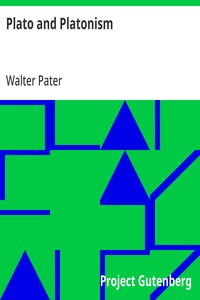
The source record for Plato and Platonism — Text and Context measures this digital text at 77,471 words, 5 hr 37 min estimated reading time, and 7 detected text sections.
The text analysis averages about 30.6 words per sentence, while the detected sections provide another way to judge how the source is divided.
Project Gutenberg metadata also associates the work with “Plato,” connecting these edition facts with the source record’s subject description.
Explore this collection
These alternatives are selected using recorded categories and estimated reading time.
About 339 minutes
Metaphysics
77,942 recorded words. 2 minutes difference from this book's estimate.
View Gutenberg source #785About 293 minutes
Metaphysics
67,280 recorded words. 44 minutes difference from this book's estimate.
View Gutenberg source #1653About 182 minutes
Metaphysics
41,810 recorded words. 155 minutes difference from this book's estimate.
View Gutenberg source #455Search stored excerpts and compare books → Choose by your preferences →
Choices use stored catalog measurements. Estimates vary with reading speed. A shared category is a catalog label, not a claim that two books have the same argument or literary quality.
Search reads excerpt text stored with this catalog and links to its associated Gutenberg record. The connection is stored in the site database; this tool does not recheck that every excerpt is word-for-word identical to that external record. Excerpt search does not cover every chapter and does not verify historical publication dates.
Catalog snapshot checked: 2026-09-25. Coverage: 92 public books, 92 available source excerpts.
Calculated from edition completeness, EPUB availability, text structure and catalogue metadata. Not a user rating.
Total of 100 points, scaled to a 2.5-5.0 range. Editions with an empty description or a missing EPUB file are not scored.
Public-domain source text
The source text is kept in the dedicated reader, separate from this catalogue record and its commentary.
Walter Pater opens Plato and Platonism with a striking claim: "Nature makes no sudden starts." This principle governs his entire approach, as he treats Plato not as a solitary genius but as a thinker shaped by earlier currents—Heraclitus, the Eleatics, the Sophists. Pater’s own prose mirrors this gradual unfolding; he builds arguments through accumulation, often pausing to gloss Greek terms or to note the emotional weight of a phrase. The reader quickly senses that this is less a systematic exposition than a portrait of a mind in dialogue with its predecessors.
Pater insists that philosophy has "no absolute beginnings." He illustrates this by tracing Plato’s debts: the doctrine of flux from Heraclitus, the Eleatic reduction of "the Many to the One," the Socratic method. But his method is not merely historical; it is rhythmic. He alternates between broad claims and close readings of single words—panta rhei, theōria, ta erōtika—as if each term were a node where centuries of thought converge. The pace quickens when he confronts Plato’s own contradictions, then slows again for a patient gloss. This ebb and flow mirrors his thesis that Platonism is a "tendency" rather than a doctrine, something felt as much as reasoned.
Pater’s own voice is distinctive: formal yet intimate, given to parenthetical asides and sudden shifts in register. He describes Plato’s world as "already almost weary of philosophical debate," its air "sickly with off-cast speculative atoms." Such metaphors are not decorative; they carry argumentative weight, suggesting that ideas have a physical presence. When he discusses the theory of ideas, he refuses to treat it as a fixed system, calling it instead "a way of regarding and speaking of general terms." The emphasis on speaking is crucial: for Pater, philosophy is a verbal art, and its truth lies partly in the texture of its utterance. He notes how Plato’s dialogues reflect "the marked peculiarities of himself and his own mental complexion," a remark that applies equally to Pater’s own prose.
Pater’s sentences are long, often periodic, but they rarely lose direction. He manages pace by varying the density of reference: a page dense with Greek transliterations and allusions to the Timaeus or Parmenides will suddenly yield to a plain statement. The effect is cumulative, demanding patience but rewarding it with moments of clarity. Consider his handling of realism: he defines it, then immediately qualifies it, then offers a hypothetical "we might say" that repositions the reader. This is not confusion but a deliberate slowing of thought, forcing the reader to dwell on each step. The book’s seven chapters, each with a distinct focus, create a larger rhythm—from motion to rest to number to the theory of ideas—that mirrors the intellectual journey it describes.
Pater frequently inserts Greek phrases and his own translations, often with a note on their nuance. For instance, he renders ta erōtika as "the discipline of sensuous love," then adds a literal gloss. These moments serve a dual purpose: they anchor the argument in primary texts and they slow the reading pace, inviting scrutiny. The reader is not allowed to glide over Plato’s words; Pater insists on their strangeness. This technique aligns with his broader claim that philosophy is a matter of language as much as logic. The glosses also reveal Pater’s own interpretive choices, making visible the act of reading that his book enacts.
Pater’s Plato and Platonism rewards a reader willing to move at its own pace—attentive to the weight of a single word, the shift from a Greek term to its English shadow. The book is best approached not as a guide to Plato’s doctrines but as a performance of how one mind engages another across time. Let the rhythm of Pater’s sentences guide you; pause where he pauses, and note where he quickens. The effort yields not a summary of Platonism but a sense of its living texture.
I found myself thinking about how Plato’s voice lingered, not as fixed answers but as a living pace—his ideas folding like quiet afternoons. That same unhurried rhythm surfaced again in How to Live on 24 Hours a Day — A Reader’s Guide, where time feels less like a schedule and more like a companion. It reminded me of Pater’s gentle tracing—nothing forced, just presence.
Use these questions to collect your thoughts before moving on.