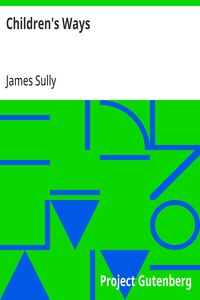
Children's Ways by James Sully
Published in 1897, Children's Ways is James Sully's attempt to understand the inner world of children using the tools of his time—observation and psychology. There's no traditional plot with heroes and villains. Instead, the 'story' is the unfolding discovery of a child's mind. Sully acts as our guide, presenting case after case of child behavior he's witnessed or collected.
The Story
The book is structured around the big questions of early life. Sully documents how children learn language, not just by copying, but by creating their own hilarious and logical rules (like saying 'foots' instead of 'feet'). He spends chapters on play, showing how a stick becomes a sword and a blanket fort becomes a castle, arguing this isn't just fun but serious work. He looks at their early moral reasoning, their fears, their first clumsy attempts at art, and their endless 'why?' questions. The narrative drive comes from following Sully's own curiosity as he pieces together a picture of childhood as a distinct and valuable state of being, not just a waiting room for adulthood.
Why You Should Read It
What struck me most was Sully's respect. These aren't just cute anecdotes. He's genuinely amazed by the creative intelligence of kids. When a child draws a person with a huge head, Sully doesn't call it bad art; he suggests the head is big because it's the center of a child's world—the place where talking and seeing happen. This perspective is a gift. It makes you slow down and appreciate the weird brilliance of a toddler's logic. While some of his 19th-century science is dated, the core feeling—the wonder at a child's perspective—is timeless. It's a reminder that the way kids see the world isn't wrong, it's just different, and often more imaginative.
Final Verdict
This book is perfect for parents, teachers, or anyone who spends time with kids and wants a deeper peek behind the curtain. It's also a fascinating read for history or psychology fans interested in how people used to think about childhood. It’s not a quick, breezy read—it’s a thoughtful, observational one. You don't read it for plot twists, you read it to have your mind changed about the small philosopher living in your house or classroom. Keep in mind it's over a century old, so read it like you're having a conversation with a very smart, very attentive great-great-grandfather of child psychology.
The copyright for this book has expired, making it public property. It serves as a testament to our shared literary heritage.
Mary Johnson
5 months agoHaving followed this topic for years, I can say that the way the author breaks down the core concepts is remarkably clear. I'll be recommending this to my students and colleagues alike.
Lisa Robinson
1 year agoI didn't expect much, but it creates a vivid world that you simply do not want to leave. Don't hesitate to start reading.
Emily Harris
1 year agoIf you're tired of surface-level information, the structural organization allows for quick referencing of key points. This is a solid reference for both beginners and experts.