
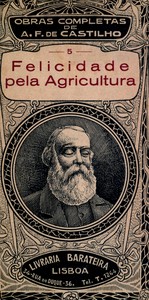
Felicidade pela Agricultura (Vol. II) by Antonio Feliciano de Castilho
Let's set the scene. It's the mid-1800s in Portugal. Europe is chugging full steam into the Industrial Revolution, but Antonio Feliciano de Castilho, a respected literary figure, is looking the other way—back to the land. 'Felicidade pela Agricultura' is his love letter to farming, but Volume II is where his argument gets serious. He doesn't just list crop rotations. He builds a whole world view from the ground up.
The Story
There isn't a plot in the novel sense. Think of it as a guided tour of an ideal life. Castilho walks you through the farmer's year, from planting to harvest. But with each season, he connects the physical work to something deeper. Tilling the soil becomes an act of patience and faith. Harvesting is a lesson in gratitude and the natural rewards of hard work. He contrasts this with what he sees in the city: stress, greed, artificiality, and a disconnect from what he believes is our fundamental nature. The 'story' is his attempt to convince the reader—and perhaps himself—that the solution to society's ills isn't more progress, but a conscious return to a simpler, agrarian rhythm.
Why You Should Read It
I picked this up expecting a historical curiosity and found it shockingly relevant. In our age of burnout, digital overload, and climate anxiety, Castilho's core idea—that working with nature is fundamentally good for us—hits different. It's not a practical guide (some of his advice is, frankly, outdated). It's a mood. Reading it is like a mental detox. His passion is contagious. You start to see the act of growing food not as a chore, but as a sacred, grounding practice. It made me look at my little balcony herb garden with new respect. He's a romantic, so he glosses over the back-breaking hardship of real 19th-century farm life, but that's not the point. The point is the feeling he's selling: purpose, connection, and a quiet kind of joy.
Final Verdict
This is not for everyone. If you want a tight narrative, look elsewhere. But if you're a fan of old-fashioned philosophy, have an interest in pastoral literature, or just feel a nagging sense that modern life is moving too fast, this book is a fascinating time capsule. It's perfect for history buffs who like social commentary, gardeners who enjoy the poetry of their hobby, or anyone who needs a compelling reason to unplug and go for a walk in a park. It's less of an instruction manual and more of an invitation to remember where we came from.
Legal analysis indicates this work is in the public domain. Use this text in your own projects freely.
David Harris
1 year agoClear and concise.
Liam Ramirez
8 months agoRecommended.




Ava Thompson
3 months agoHelped me clear up some confusion on the topic.