
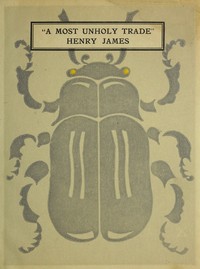
"A Most Unholy Trade," Being Letters on the Drama by Henry James by Henry James
Forget everything you think you know about Henry James as just the author of dense, interior novels. 'A Most Unholy Trade' shows us a different James: the critic, the letter-writer, and the deeply disappointed theater lover. This book collects his thoughts on drama from the late 19th century, a time when the stage was changing fast.
The Story
There's no single plot. Instead, we follow James's mind as he reacts to the theater world of his day. Through letters to friends and published essays, he lays out his case. He believes deeply in drama as a serious literary form, equal to the novel. But what he sees flourishing is a kind of commercial, crowd-pleasing theater that he finds empty and artistically bankrupt. He calls playwriting a 'most unholy trade' because it forces the artist to compromise—to simplify characters, exaggerate emotions, and chase popular success instead of truth. We see him analyze specific plays, bemoan the tastes of audiences, and wrestle with his own failed attempts to write for the stage. It's the story of a purist watching an industry evolve in a direction he can't stand.
Why You Should Read It
This book is a secret key to understanding James's fiction. His obsession with nuance, psychological depth, and the unspoken moment in his novels makes perfect sense when you see how much he hated the opposite in plays. His letters are witty, surprisingly direct, and full of personality. You get the sense of a man shouting into the wind, and it's weirdly relatable. Even if you don't know the specific plays he's talking about, his arguments about art versus commerce, integrity versus popularity, are timeless. It's also just fun to see a literary giant get so genuinely worked up about something. This isn't dry theory; it's one artist's passionate, personal fight for what he believes in.
Final Verdict
Perfect for fans of Henry James who want to see a new side of him, or for anyone interested in the history of theater and criticism. It's also great for people who love a good, intelligent argument about art. This isn't a light read—it requires a bit of patience—but it rewards you with a vivid, human portrait of a brilliant mind grappling with a changing world. You'll come away thinking differently about what makes a story work, whether on the page or the stage.
This work has been identified as being free of known copyright restrictions. It is available for public use and education.
Thomas Thompson
6 months agoExactly what I was looking for, thanks!
Liam Miller
1 year agoI had low expectations initially, however it provides a comprehensive overview perfect for everyone. Absolutely essential reading.
Michelle Wright
11 months agoClear and concise.

Donald Thomas
2 years agoLooking at the bibliography alone, the way it handles controversial points with balance is quite professional. An excellent example of how quality digital books should be formatted.